Product Gallery
Magnetic Assemblies — Typical Configurations
Rotor assemblies, magnetic couplings and separation grates — engineered, balanced and tested as complete units, ready for your production line.
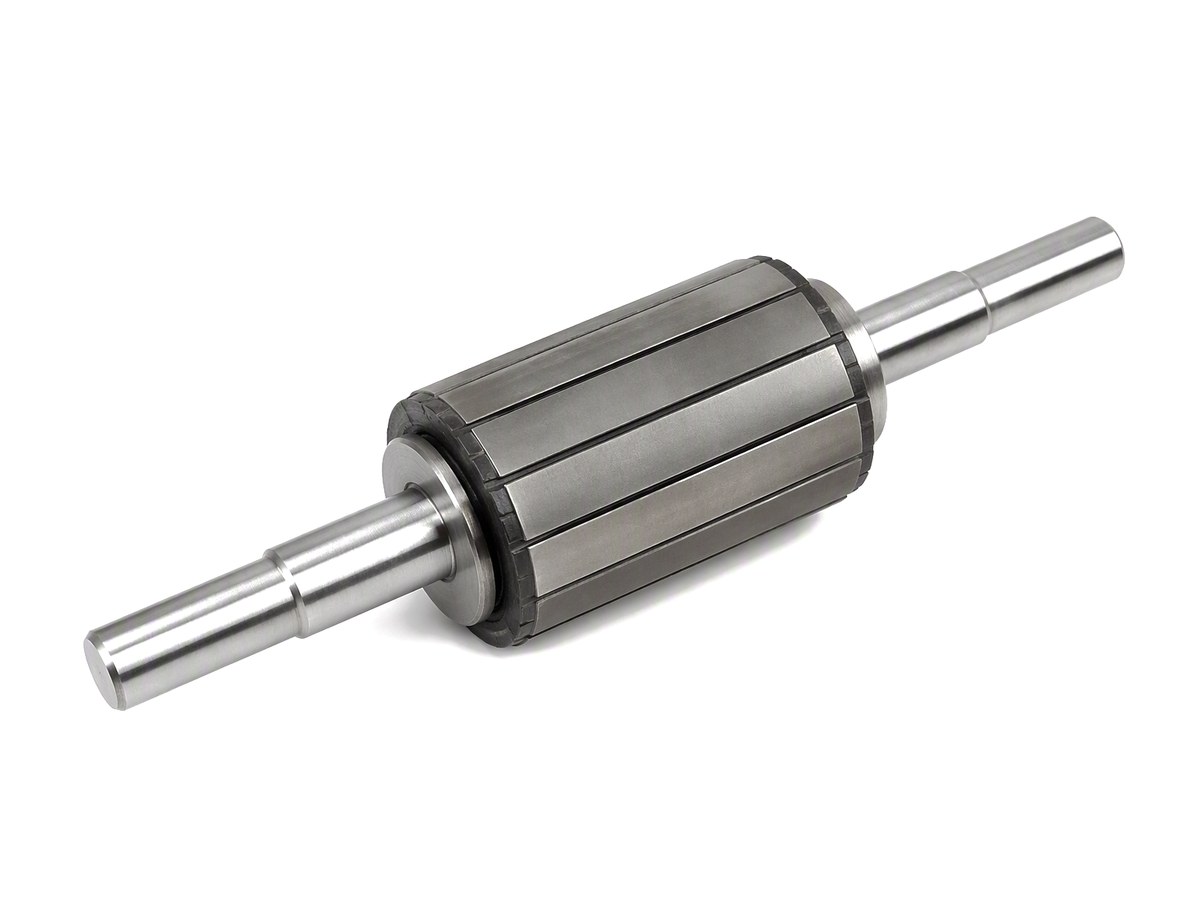
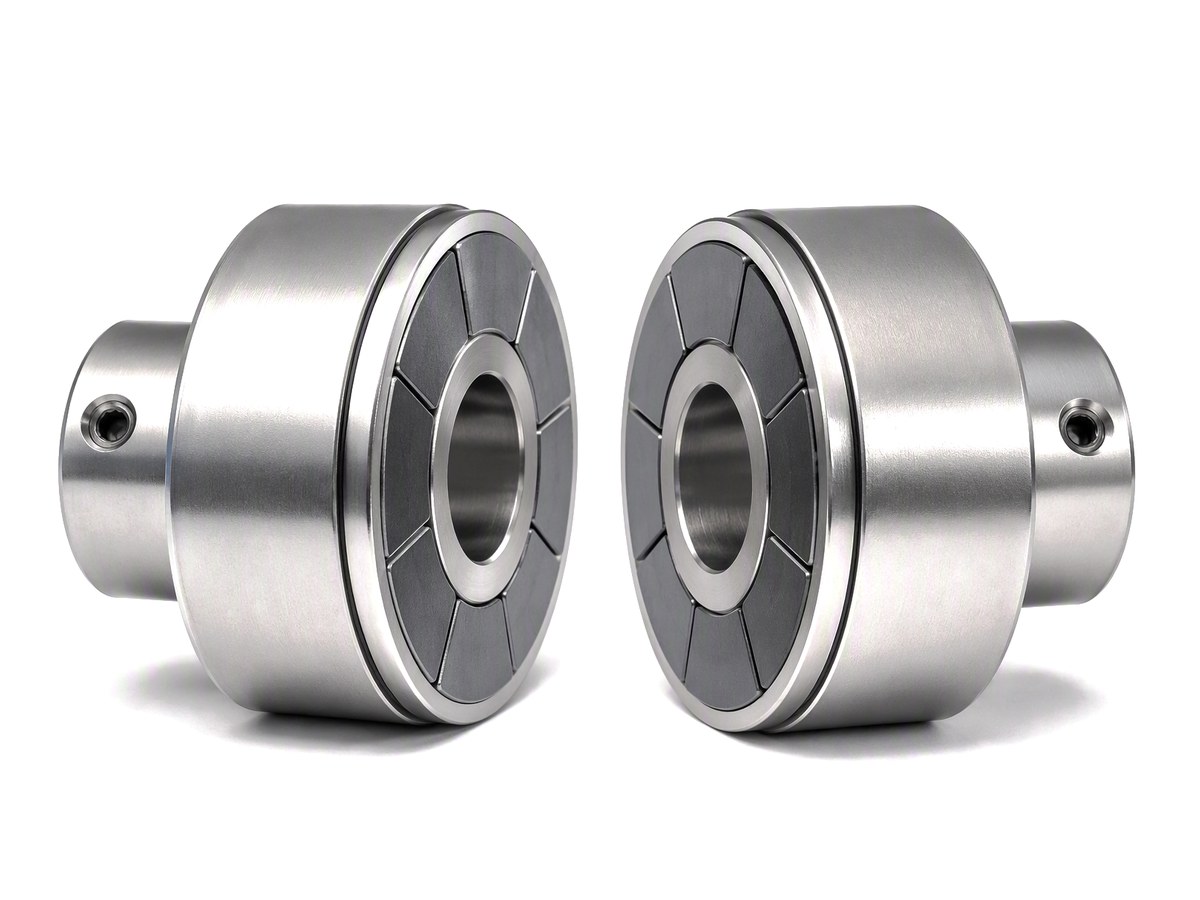
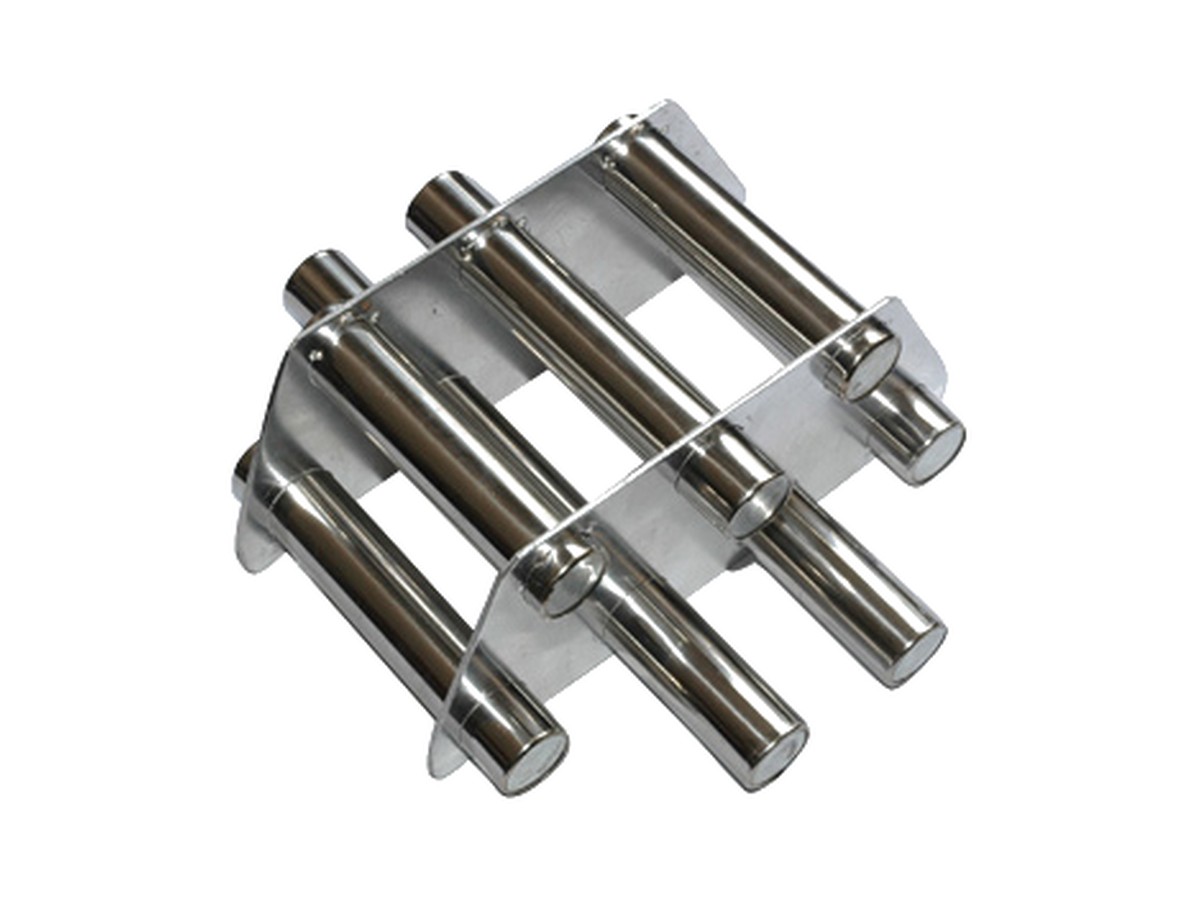
An assembly failure is never just a magnet problem — it's retention, balancing, housing and adhesive engineering. We integrate magnets with shafts, housings and sleeves into tested sub-assemblies that arrive ready for your production line, not your rework bench.
Rotor assemblies, magnetic couplings and separation grates — engineered, balanced and tested as complete units, ready for your production line.
The magnet was fine — everything around it wasn't. These are the failure modes assembly-level engineering prevents.
Centrifugal force, vibration and thermal cycling work magnets loose. Bonding alone often isn't enough — retention must be engineered: press-fit, sleeve, or mechanical lock matched to your loads.
A rotor assembled without balancing discipline vibrates at operating RPM — wearing bearings, adding noise and shortening motor life. Balance quality is an assembly property, not a magnet property.
Adhesives that cure fine at room temperature creep or embrittle across thermal cycles. CTE mismatch between magnet, adhesive and housing concentrates stress exactly where you can't inspect it.
Magnet from one supplier, housing from another, assembly in-house — stack-ups eat your air gap and your yield. One accountable source for the sub-assembly closes that gap.
We take responsibility for the interfaces — so the sub-assembly performs as a unit.
Press-fit, adhesive bonding, sleeve and mechanical retention designs selected against your centrifugal, vibration and thermal loads — with margin calculated, not assumed.
Dynamic balancing of rotor assemblies and controlled adhesive processes — surface preparation, cure schedule and bond-line thickness documented and repeatable.
Magnets sealed within stainless or alloy housings for corrosive, high-pressure or hygiene-critical environments — downhole, subsea, food and medical-adjacent equipment.
Flux, dimensional and balance verification on finished assemblies, with inspection reports per batch — FAI documentation available for new program launches.
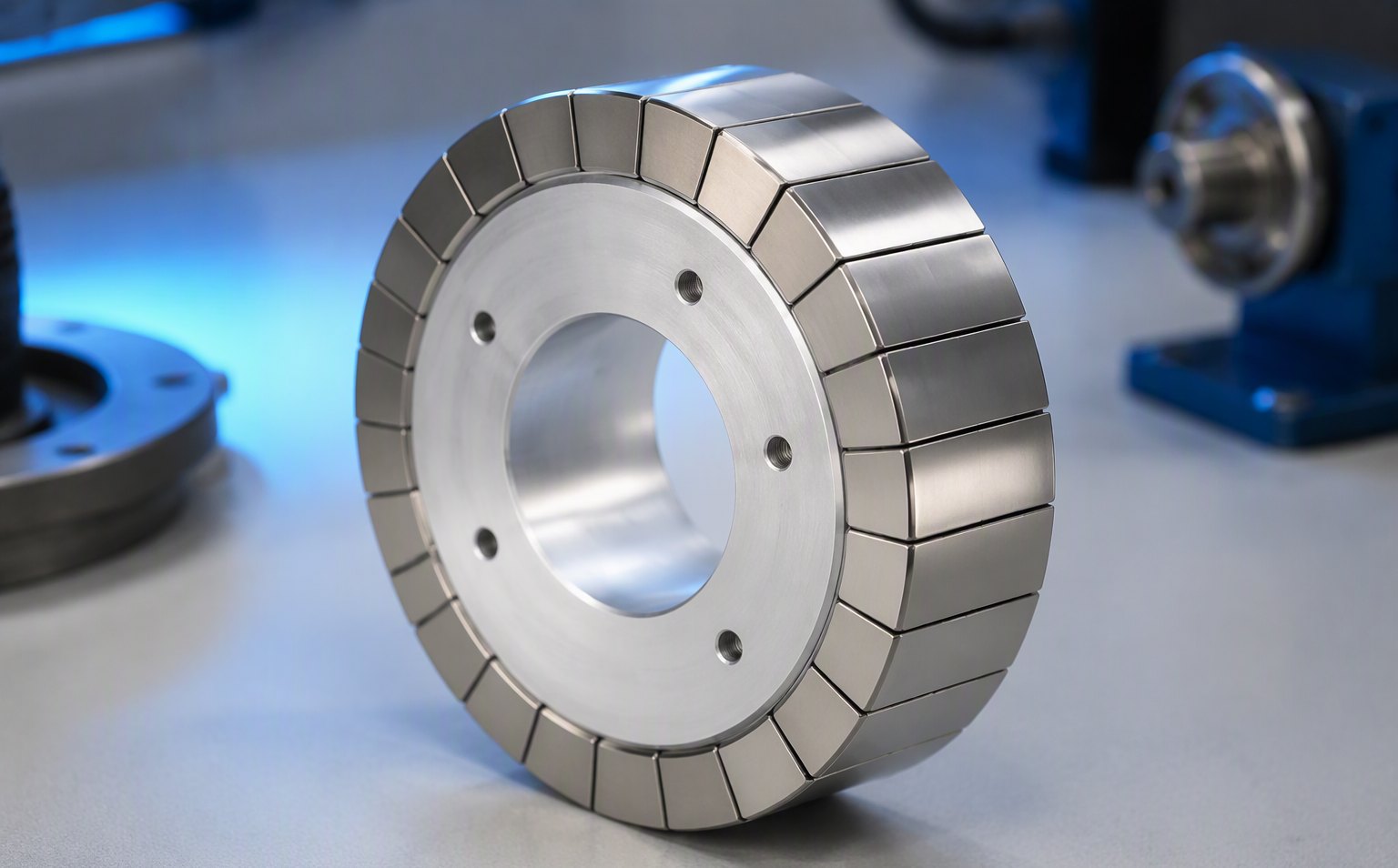
A Halbach array rotates the magnetization direction segment by segment — reinforcing the field on the working side and nearly cancelling it on the other. The result: more useful flux per kilogram of magnet, a near-sinusoidal field profile, and built-in shielding for everything behind the array.
They are also unforgiving to build. Every segment's magnetization angle and placement must hold, or the field you designed never appears. That is why Halbach arrays belong with an assembly-level supplier — magnetization fixturing, segment control and retention engineering handled as one accountable process, built to your drawings and pole pattern.
Cylindrical Halbach rotors raise air-gap flux without adding magnet mass — with sinusoidal back-EMF and lower cogging for servo, spindle and joint applications.
Halbach cylinder pairs transmit more torque at the same diameter — valuable where envelope and weight are capped but coupling margin is not negotiable.
Linear Halbach assemblies put nearly all the flux on the working face — holding, latching and conveying with almost no stray field behind the array.
Controlled field profiles for instrumentation and research-grade applications — cylindrical or linear, from pre-magnetized segments, integrated with hubs, sleeves and housings.
Everything below can be customized to your drawings and specifications.
You don't need a perfect specification to start. Send what you have — our engineers will fill the gaps with you.
Drawings or sketches — dimensions, tolerances, assembly context
Operating conditions — temperature, medium, vibration, duty cycle
Magnetic targets — grade, flux, holding force, or the problem to solve
Quantities — prototype, pilot run, or annual volume estimate
Compliance needs — RoHS/REACH, inspection reports, documentation level
Timeline — target dates for samples and production
Send your assembly drawing, loads and environment — we respond within 24 hours.
Request a Technical Assessment → info@xakmag.com